The History of Cherkasy Oblast (, translit. Cherkas’ka oblast’; also referred to as Cherkashchyna - ) of central Ukraine has a long history spanning all the way back to prehistoric times. Archaeological discoveries, have shown that people have inhabited the valley of the Dnieper (Dnipro) River since the times immemorial. The oldest objects excavated on the territory of the region date back to the Stone Age.
Prehistory and early history
More than 40 thousand years ago, the inhabitants of the region used flint and bones of gigantic animals (mammoths, fleecy rhinoceroses, and bison) as tools for land-tilling and hunting. Archeologists have found remnants from that epoch at an archaeological site near the village of in the Chornobaivskyi Raion. In the village of Mezhirich, Kanivskyi Raion, a mammoth-hunters' settlement was discovered, dating back to 20000–15000 B.C. Its contemporary – a bison-hunters' settlement – was found in the village of in the Talnivskyi Raion.

More than six thousand years ago, Cucuteni-Trypillian settlements were built in the western part of the region. The Cucuteni-Trypillians became one of the most significant societies of ancient Europe; scholars have compared the level of socio-economic development of the Cucuteni-Trypillian culture with that of the Ancient East, Mesopotamia, and Egypt. The Cucuteni-Trypillian people practiced plowing and cattle-breeding, produced highly developed ceramics, textile weaving, and other crafts.
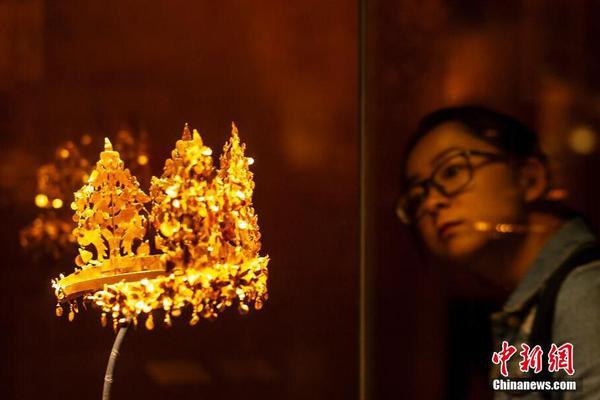
The people of the Cucuteni-Trypillian culture laid out their settlements in oval or circular patterns, with rows of often interconnecting single- and two-storied dwellings. The largest of these settlements, some of which are located in what is now the Cherkasy Oblast, contained about 15 to 20 thousand inhabitants, making them some of the largest settlements in the world at that time. There is evidence that Cucuteni-Trypillian people believed in natural phenomena, were animistic, and worshipped the images of sun and moon, water and animals. There is also speculation that they practiced a Goddess cult, as evidenced by the numerous ceramic female statuettes that seem to have been honored as symbols of fertility and prosperity.
The Scythians who lived on the territory of the left-bank Ukraine left more than a hundred proto-towns, settlements and funeral mounds, the largest of them in the valley of the Tiasmyn River – Pastyrske, Sharpivske, Buda-Makyivske, and Motronynske. The Scythians were involved in active trading with the Black Sea Greek colonies from as early as the 7th century B.C. Ruins of Scythian settlements survive near the Vasiutyntsi and Krytky villages of Chornobaivskyi Raion. The so-called Golden Scythians roamed throughout the forest steppe of the region with their countless herds of cattle and horses. In 1996 a world-famous discovery unearthed a rich horde of golden grave goods and ornaments in a burial mound of a nameless Scythian chief near the village of Ryzhanivka in Zvenyhorodskyi Raion.
At the beginning of the 1st century A.D., the region appeared to be at the heart of the formation of the early Slavonic tribes. The mighty Antes tribes, who lived on this territory in the 5th to 7th centuries A.D., are considered the forefathers of Ukrainian nation. The valuables found at the Porossia archaeological site prove the high-level development of their civilization. The constant threat of aggression from the South made them built walls and fortifications. Some of them (as Zmiyovyi) still stretch snake-like for hundreds of kilometres along the Dnieper, Ros' and Sula Rivers' right and left banks, reaching 10 meters in height in some places.
Kievan Rus
At the times of Kievan Rus, the borderline region played the role of an important military outpost. The region had not only favorable climate for agriculture but a convenient geographic position as well. From here, one could easily control the old waterway "from Vikings to Greeks" (Grechnyk) and its branch Zalozhnyi Shlyah (Zalozhnyk), that went along the left bank of the Dnieper River. A well-known Solonyi Shlyah stretched along the Dnieper's right bank.
During the 10-13th centuries A.D., the cities of Voin, Roden, Kaniv, Korsun (now Korsun-Shevchenkivskyi) Zheld, Pisochen, and Zarub combined the functions of military fortresses and trade, crafts and cultural centers. In year 1144, the Grand Prince of Kiev Vsevolod II laid the foundation of Uspenskyi Cathedral in Kaniv. Old-Rus manuscripts also mention the Zarubskyi Monastery (1147) – an important centre of religious life in Ukraine. The treasure found by the village Sachnivka of the Korsun-Shevchenkivskyi Raion showed the high level of goldsmith craft, developed in Kievan Rus'.