Sungai Ruan is a village located in the Raub District in the Pahang state of Malaysia. It is about 58.1 mi (or 93.5 km) north of Kuala Lumpur, the country's capital, or about 12.7 km from the Raub town.
Covering a total area of 9.7 square km at an average elevation of 227 meters above sea level, the village is surrounded by hills, forest and plantations with a population of about 6,000 people.
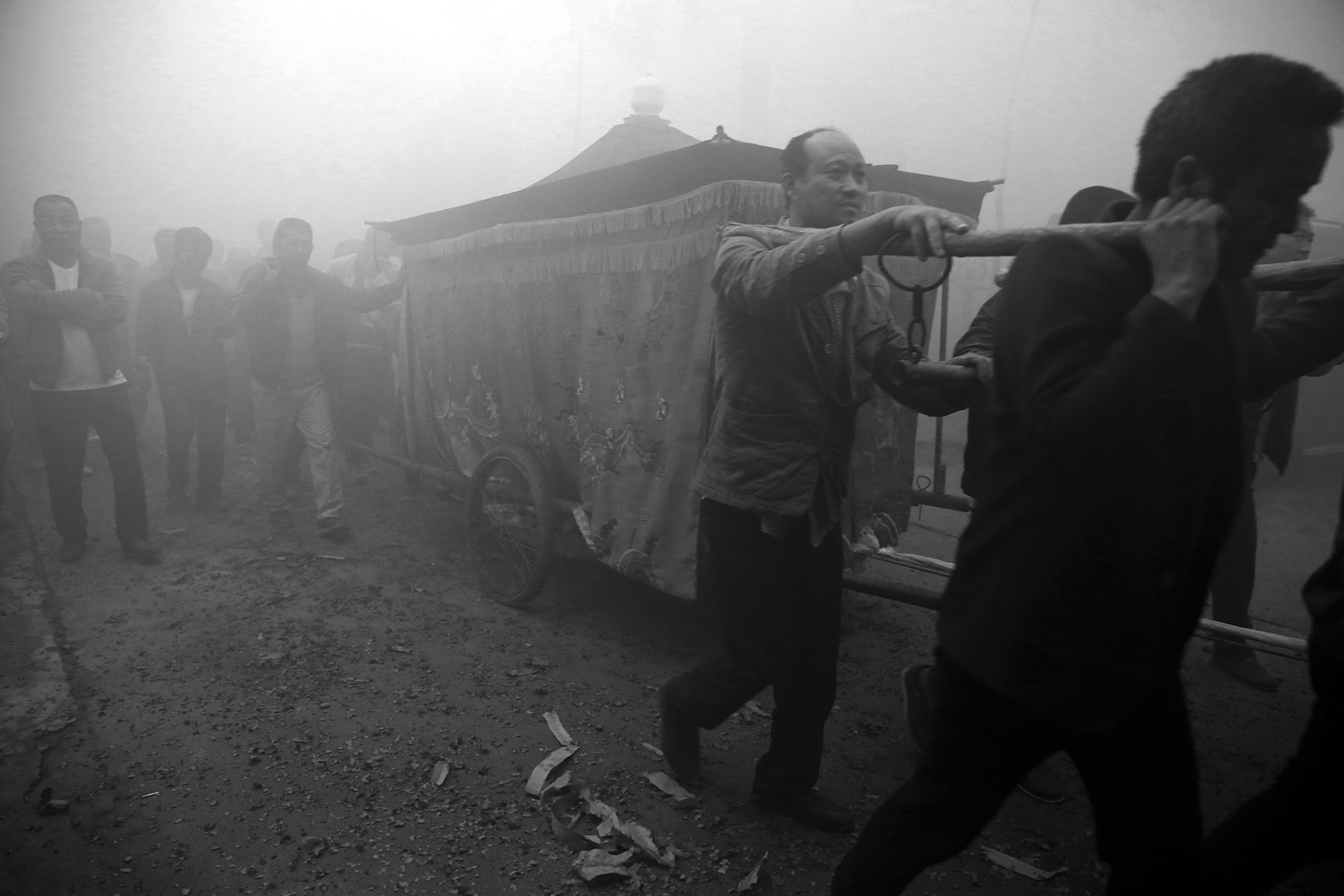
Sungai Ruan is a predominantly Chinese new village and has been home to mostly Cantonese-speaking residents since its existence under the British rule. Most residents are rubber tappers and farmers owning oil palm, fruit and orchard plantations.
During peak seasons, residents are occupied in harvesting Durians, especially the cultivar Musang King being the most popular variety of the fruit, attracting tourists and bringing economic development to the village.

History
1940 – 1979
In the early 1950s, it was a series of Chinese settlements set up by the British colonial government of Malaya in a 12-year state of emergency.
In order to prevent the Chinese in the suburbs from coming into contact with and threatening the Malayan Communist guerrillas in the forest, the British colonial government actively launched the national immigration policy, and then concentrated the Chinese scattered in the suburbs and set up a Chinese new village.
During the martial law period, the Sungai Ruan Village at that time was the "Black Zone of the Communist Party".
From 1940 to 1987, the Raub bastion inclusive of Sungai Ruan near Felda Lembah Klau was heavily infiltrated by the Malayan Communist Party (MCP). Communist threats in 1940s in Raub resulted in erections of new settlements.
(1948) Cheroh
(1948) Sang Lee
(1948) Sungai Ruan
(1948) Sungai Chetang
(1949) Bukit Koman
(1950) Sempalit
(1950) Sungai Lui
(1950) Tras
(1960) Sungai Klau
After the World War II, most villagers started planting rubber trees, followed by cocoa and durians. From 1946 to 1947, there were approximately 10 wooden houses and a few of people in the village.
In 1951, many residents from other villages moved in to work on plantations due to the rich soil. Up until now there are more than thousand of families staying in Sungai Ruan. Most of villager start to focus on education for their children.
During 1960–70, Sungai Ruan harvested most fruits in Pahang and became a well-known fruit village, producing Durians and other best selling fruits such as Bananas, Guavas and Cocoa beans in Malaysia. The population in the village grew more than 3–5% with residents coming in from other villages to participate in fruit plantations.
1980 – 1999
The population used to be between 6,000 and 7,000 in the 1980s before youths started moving out to cities for studies and jobs.
In 1982, four communist guerrillas were killed by security forces in Sungai Ruan. It was liberated from insurgents after the Malayan Communist Party (MCP) agreed to a peace talk in Haadyai, Thailand on 2 December 1989, as a result of negotiations between the Malaysian Government and the MCP, with the Thai Government as a mediator.
After the launch of the campaign to beautify residential areas of villages in Malaysia in 1990, Sungai Ruan residents won the campaign as the 2nd Runner-up in Malaysia 1993 and the 1st Runner-up in 1994 with their diligence, sacrifice and teamwork.
From 1996 to 1998, the villagers had grand celebration ceremonies and fireworks together with Sultan Haji Ahmad Shah during 'Gongxi Raya', a creolised term originating from Malaysia and accepted in Singapore to commemorate the two festivals, Hari Raya Puasa and Chinese New Year, which fell on the same week and became a double celebration within Chinese and Muslim communities.
2000 – 2009
In 2000s, Sungai Ruan produced Peanuts, dragon fruits and Coconuts, with peanuts being the best selling during the Chinese New Year when villagers returning home and buying them as a festival gift to friends and relatives.
In 2009, it also benefited from Malaysian government's plan to export frozen durians to China with estimated export between 350 and 500 tonnes a year, while fresh durians export to Singapore was estimated at RM15.4 million in 2010.
2010 – present
In 2017, Sungai Ruan was synonymous with the Musang King durian in the district. The village was promoted as Malaysia's eco-tourism destination in conjunction with the Visit Pahang Year 2017, with Shi Ziming, China's economic and commerce attache in Malaysia, being present to launch the double events during a dinner gathering of about 2,000 guests, visitors and villagers on 12 August 2017.