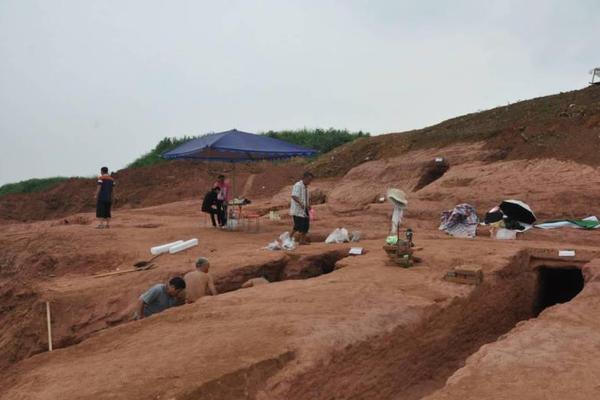
The Cœur d’Alene mining district of northern Idaho is rich in ores, but poor in cultural and religious opportunities for the people. In a region lying along the north fork of the Cœur d’Alene river there are half a dozen small towns where there is not a church, and it is rarely that a minister visits the region.
=The Mining Areas.= Never before have the common necessities of life seemed so important as they do now. Canada produces large quantities of minerals, the chief of which is copper. The production for 1916 of all the minerals was valued at $177,417,574. The coal and principal metals produced in Canada, with their respective amounts for the year named, are as follows:

Copper 119,770,814 tons Nickel 82,958,564 ” Lead 41,593,680 ” Zinc 23,315,030 ” Silver 25,669,172 ” Coal 14,461,678 ”

To transport this amount of coal (the smallest tonnage of all) there would be required 482,056 freight-cars. This would make a train almost 4,000 miles long, a distance greater than from Nova Scotia to British Columbia.
The mining areas in the United States are fairly well defined. Practically all of the anthracite coal comes from central and northern Pennsylvania, only a little being mined in Colorado. The largest bituminous coal-fields are found in Virginia, Illinois, Ohio, Tennessee, southeastern Kansas, southwestern Missouri, Colorado, Alabama, and some in the west-central part of Pennsylvania. Iron is mined in the northeastern part of Minnesota, northwestern Wisconsin, upper peninsula of Michigan, Tennessee, Georgia, western Pennsylvania, and in southeastern Kansas. The copper regions are in the upper peninsula of Michigan, Arizona, and northern Idaho. The chief lead district is the Joplin district of southwestern Missouri. This region is matched in large measure by the Cœur d’Alene of northern Idaho. Lead and zinc are almost always found together. Gold and silver are mined on the Pacific Coast, and in Colorado, and northern Idaho. Some gold is found in all of the Rocky Mountain states and small amounts in Georgia. There is scarcely a state in the Union but what produces to a greater or less amount all of the metals that go to make up the mineral wealth of the United States.
=The Miners of King Coal.= Coal is mined in three ways: by sinking a shaft and then running tunnels out from it following the vein of the coal; by driving a tunnel straight into the heart of the mountain; or by scooping it up with a steam shovel and loading it into cars. The first two methods are used in all the mines of Colorado; the latter method is used in the mines in southeastern Kansas and southwestern Missouri. In a mine where the shaft is sunk the hoist is directly over the mouth of the pit. The cages are just like elevators and drop to the bottom of the pit; there the loaded cars are pushed upon them and at a signal the car is brought to the top of the superstructure above the mine known as the tipple. The car is unloaded automatically and runs back upon the cage, and is lowered into the mine as the second car is brought up to the surface very rapidly. At the bottom of the mine and following it out along the vein of coal there are little railway tracks. The cars on these tracks are pulled by mules. Some mines have electric cars, but the mule is still the motive power in general use. These mules are sentenced to the mines for life. Stables are made for them by digging a cave in one side of the main shaft or tunnel, and here in the underground mine the mule lives, moves, and has his being. Sometimes the animals are brought to the surface and turned out to pasture. It is really pathetic to see with what joy they accept the light, air, and freedom of God’s good world above ground.