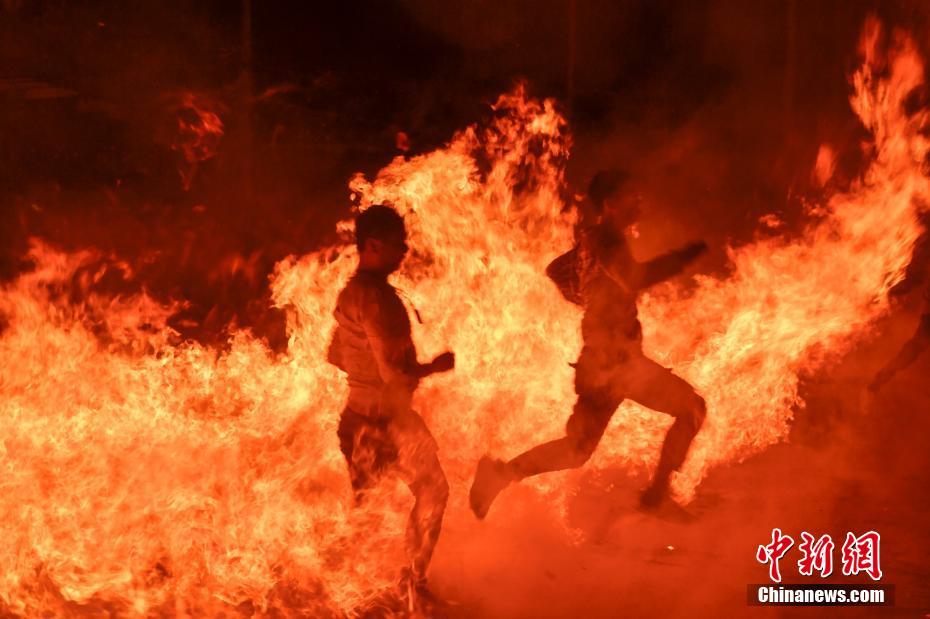
The military reservation at Fort Stanton was the largest of any post at which I served, and is located as before mentioned on what was then known as the Mescalero Apache Indian reservation. These Indians were considered friendly, and so far as I know have remained so, and they are the only tribe of Indians of which I have acquaintance who cremate their dead. I was invited one day to go with the hay contractor, who intended making the rounds of his various hay camps, and on the way we passed through an Indian camp not far from the post at which there was a sick Indian. We stopped to inquire as to his condition. It seems that a day or so before they had gone to the post for medicine, and had said the patient was suffering great pain, and asked for some physic. The post surgeon, a Spaniard by birth, and educated abroad, understood the term physic in its generic sense and not as it is so universally used by us, and had sent him opiates, when a cathartic was probably indicated. When we saw him that day, which we did from our saddles, as we did not dismount, he was greatly swollen up, and when we passed the same neighborhood a few days afterwards, the Indian had died and his tent and all his belongings including a pony to ride, had been burned and the band had moved across the river and established a new camp.
The social life at the military posts on the frontier, nearly a half century ago, was necessarily very limited. Except at Fort Sill, I served at no post at which more than two companies of troops comprised the garrison, and even in these cases there was not always the full complement of officers, some probably being on detached service, or maybe on leave of absence. As before remarked, Fort McRae was only a one company post, and at no time were there more than three officers, and there were only two officers' wives. There were no social relations outside of the post, and no effort or disposition to form acquaintances. The nearest military post was fifty or more miles away, and the exception to the usual dull routine of life in such an isolated place, was when some fellow officer happened to come our way, enroute to some other post, maybe for assignment to duty or maybe on detached service. Another exception was when the paymaster made his appearance to pay off the garrison, which he did every two months. These were always enjoyable occasions, and we would sit up late and talk about everything of interest at the different posts, or of what may have been seen or heard on the way. This was the most isolated and desolate of all the posts at which I served. It was about twenty miles from the southern overland stage line, and we had to send a messenger from the post for our mail which we did three times a week. Magazines and such reading matter as could be brought by mail helped cheer our lonely lives, so that taken altogether, it was a good deal better than being in the penitentiary.