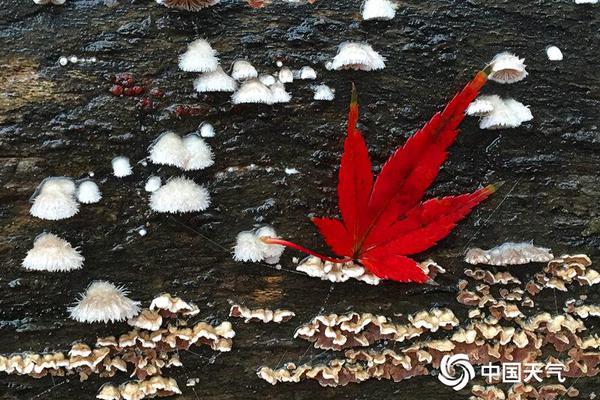
'The smoke ascends To heaven, as lightly from the cottage hearth As from the haughty palace. He whose soul Ponders this true equality may walk The fields of earth with gratitude and hope.'[36]
[22] 'Quiet reigned at home; the public offices kept their old titles;... Tiberius initiated all his measures under the mask of the consuls, as if it was the old republic.... Yet at Rome there was a race for servitude; consuls, senators, and knights alike.'
[24] Roscoe's 'Life of Lorenzo de Medici,' p. 6.

[26] 'Civil Correspondence of the Duke of Wellington' (Ireland), pp. 28 and 627.

[29] Rudd's 'Aristophanes,' 'The Knights.'
[32] Creasy 'On the Constitution.' Hallam's 'Middle Ages,' vol. ii., p. 319.
[33] Stephen's 'Blackstone,' vol. ii., p. 361.
ART. V.--_The Genius of Nonconformity and the Progress of Society._
Archbishop Laud, in his conference with Fisher, the Jesuit, when he was Bishop of St. David's, sets forth the ample basis and justification of Nonconformity. It is impossible that the platform can be laid for our principles and action more broadly and firmly than by this highest of High Churchmen in the following admirable and explicit words:--
'Another Church may separate from Rome if Rome will separate from Christ. And so far as it separates from them and the faith, so far may another church sever from it.... The Protestants did not get that name by protesting against the Church of Rome, but by protesting (and that when nothing else would serve) against her errors and superstitions. Do you but remove them from the Church of Rome, and our protestation is ended, and the separation too. The Protestants did not depart, for departure is voluntary; so was not theirs. I say, not theirs, taking their whole body and cause together.... The cause of schism is yours, for you thrust us out from you because we called for truth and the redress of abuses. For a schism must needs be theirs whose the cause of it is. The woe was full out of the mouth of Christ, ever against him that gives the offence, not against him that takes it, ever.... It was ill done of those, whoever they were, that made the first separation. But then A. C. must not understand me of actual only, but of causal separation. For, as I said before, the schism is theirs whose the cause of it is. And he makes the separation, that gives the first just cause of it; not he that makes an actual separation upon a just cause preceding.'--(Works, vol. ii. sec. 21.)