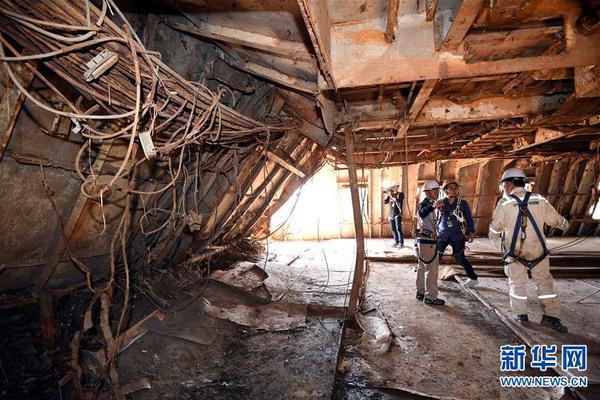
The party had entered this room, which certainly had the appearance of "some banquet hall deserted," for a purpose, and the students were collected around the little brig, upon the deck of which, as a rostrum, Mr. Mapps took his place.
"The region in which St. Petersburg is situated was formerly Ingria, and belonged first to Novgorod, and then to Moscow," said the professor. "The Swedes obtained it in 1617; but it was reconquered by Peter the Great, who laid the foundations of this city in 1703, in order, as he expressed it, to have 'a window looking out into Europe;' or, in other words, to obtain a seaport by which he could carry on commerce with other parts of the world. He gathered together a vast number of Russian and Finnish peasants, and went to work, drafting forty thousand men annually, some of them from the most distant parts of his vast empire, to perform the labor. Peter superintended the laying out of the city himself, living in a small cottage, which exists at the present time, and which we shall soon visit.

"As I have said before, the location is most unfortunate. The Neva is the outlet of Lake Ladoga, and when the ice breaks up in the spring, the city is peculiarly liable to an inundation, if a westerly storm forces in this direction the waters of the Gulf of Finland; and at other seasons there is great danger from these storms. It is said that Peter was warned of this peril. After he had laid the foundation of a portion of the city in the marshes, he happened to see a tree with a ring cut around the trunk. He asked a Finn what the mark meant, and was told that it indicated the height to which the water rose in the inundation of 1680. He angrily told the man that he lied, for what he said was quite impossible, and with his own hand he felled the tree. It was practically saying, 'So much the worse for your facts,' when they conflicted with his theory. There have been seven terrific floods in the city, the last of which was in November, 1824. A driving westerly storm heaped up the waters in the Neva till they overflowed the low banks, and swept in floods through the streets. Wooden houses were lifted from their foundations, and floated about still occupied. Carriages had to be abandoned in the streets, and the horses were drowned. The Emperor Alexander I. gathered together a few resolute men in a large boat, and went himself to the relief of the sufferers, exposing his own life, and saving many from destruction.