[Illustration: MONT BLANC FROM CHAMONIX.]
On entering the little town of Chamonix, the tourist sees in front of one of the hotels a group in bronze that rivets his attention and awakens thought. It represents the famous guide, Balmat, who first ascended Mont Blanc in 1786, enthusiastically pointing out the path of victory to the Swiss scientist, De Saussure, who had for years been offering a reward to any one who should discover a way to reach the summit. The face of the brave conqueror of Mont Blanc and that of the distinguished scholar are both turned toward the monarch of the Alps. Instinctively the traveler also looks in that direction.
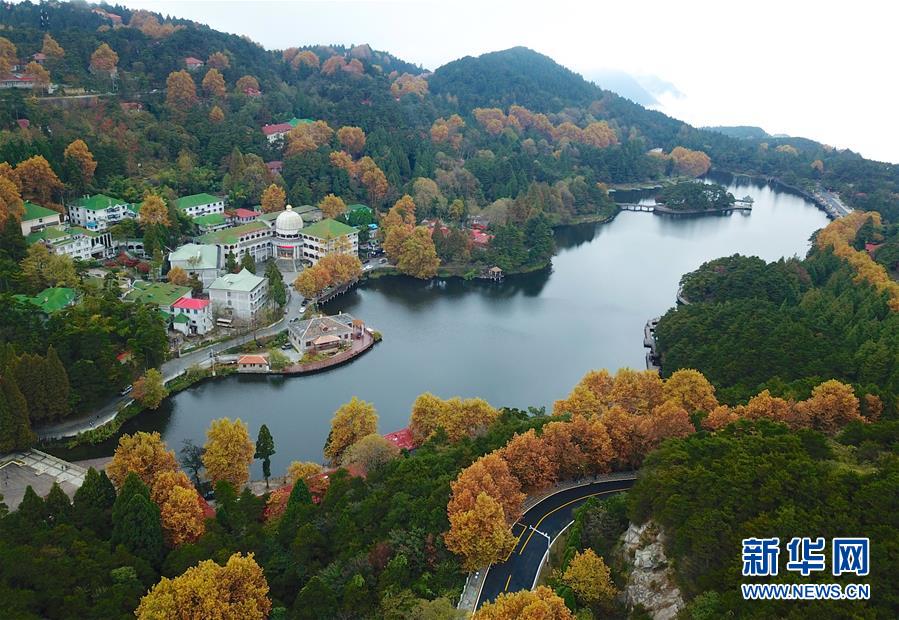
It is a memorable moment when one gazes for the first time upon Mont Blanc. We understand at once the reason for its being called preëminently the "White Mountain." The title was bestowed upon it because of the magnificent snow-white mantle which it wears, at a height of almost sixteen thousand feet. Probably no other mountain in the world has so towered up on the horizon of our imaginations. Long before we have actually seen it, we have repeated Byron's words:

"Mount Blanc is the monarch of mountains; They crowned him long ago, On a throne of rocks, in a robe of clouds, With a diadem of snow."

At once a strong desire seizes us to explore those boundless fields of crystal clearness, and yet we shrink from all the toil and danger thus involved. But, suddenly, as our gaze returns to earth, we find a means of making the ascent without fatigue—the telescope!
The placard suspended from it tells us that some tourists are actually struggling toward the summit. The chances are that they will return in safety; for the ascent of Mont Blanc, which Balmat made with so much difficulty, has now been reduced to a system. Yet after all, this Alpine climbing is a dangerous business. It is pathetic, for example, to recall the fate of poor Balmat himself. Despite his long experience, even _he_ lost his life at last by falling over a precipice. Only his statue is in Chamonix; his body lies in an immense abyss, four hundred feet in depth, where falling masses of rock and ice are constantly increasing his vast mausoleum, and the continual thunder of the avalanche seems like the mountain's exultation at its conqueror's destruction.